
Inset Cabinets
Doors and drawers sit flush inside the face frame rather than overlaying it — a furniture-style detail associated with higher-end custom kitchens.
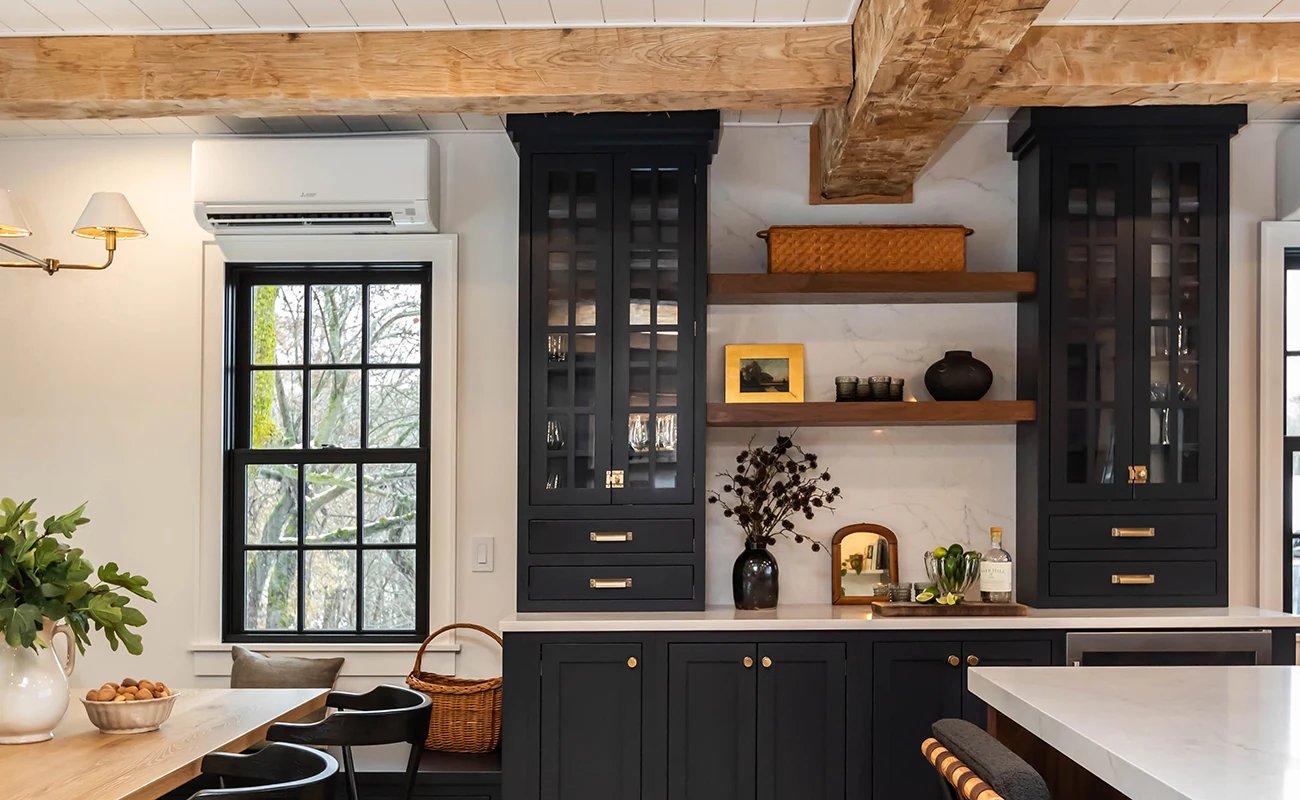
Pros
- Furniture-quality, custom-built appearance
- Highlights precise reveals and hardware
- A hallmark of premium cabinet lines
Considerations
- Higher cost than overlay construction
- Requires tighter tolerances and precise installation
How Inset Cabinets are actually built
Inset construction is the oldest cabinet-building method — it's how furniture-makers built built-in cabinetry long before overlay doors became the industry standard. The door sits inside the face frame opening rather than covering it, with a small, even reveal (usually 1/8") all the way around.
That even reveal is the hard part. It requires the box, the frame, and the door to all be built and installed to much tighter tolerances than an overlay door, where the door simply covers any small gaps in the frame underneath. That precision is exactly why inset cabinetry costs more and takes longer to build.
The payoff is a look and feel that reads as genuinely custom-built furniture rather than manufactured cabinetry — hinges are often visible by design (sometimes decorative butt hinges rather than concealed European hinges), which is part of the furniture-style appeal rather than a flaw.
Inset Cabinets across our brands
Real door samples in this style, pulled from the brands we carry.
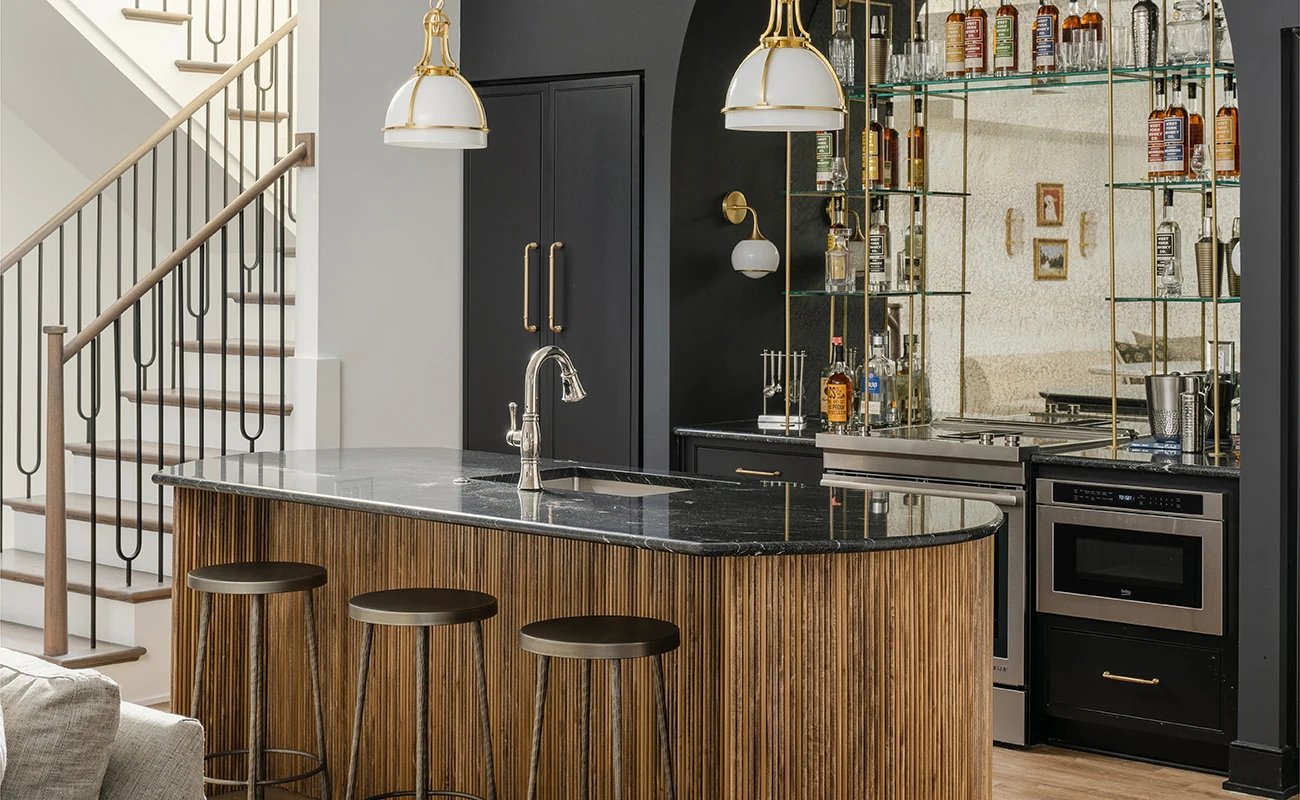
See Inset Cabinets in our brand lineup
Bertch's Quincy door in Indigo Walnut and their Clarkson beaded-inset door are both true inset construction.
Most of our cabinet brands offer this style across multiple finishes and wood species.
Browse Cabinet Brands